

Personal Finance
When life knocks your finances off course

Björn Berg
10. ágú. 2026
Serious setbacks such as illness, divorce, job loss or trauma can make it hard to keep personal finances on track. This article explains why shame and comparison can make recovery harder, and how small first steps, breathing room, an emergency fund and debt repayment can help rebuild financial security.
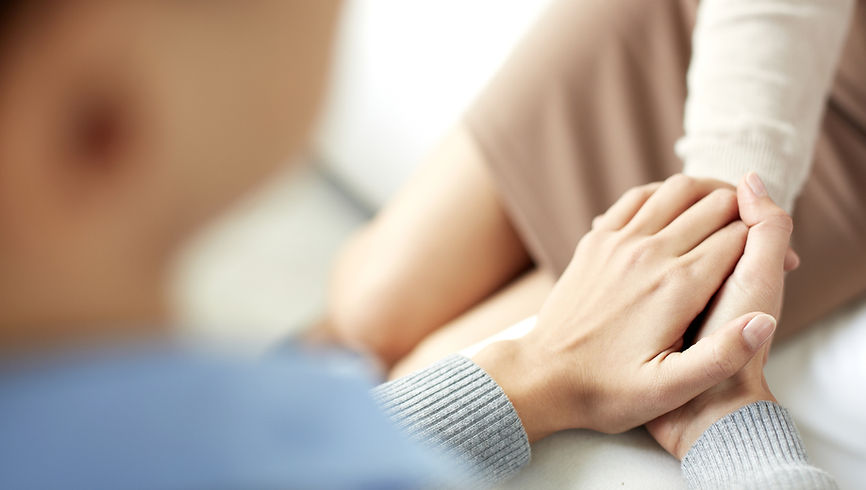
When life hits hard, money is rarely the first thing we manage to deal with. That is completely understandable. If you are going through illness, divorce, job loss, grief, trauma or some other serious setback, the household finances may have to wait for a while. The important question is how we can limit the damage while we are getting through the difficult part.
We can talk all day about what people should do with savings, debt, spending and investments. But personal finance does not happen in a textbook. It happens in real life. And real life does not always behave.
Most of the time, we do our best. We go to work, pay the bills, maybe save a little, try not to make foolish decisions and keep the household moving. That can be complicated enough. Then something happens. An accident. Illness. Divorce. Losing your job. A serious shock in the family.
Suddenly, your energy goes into getting through the day. You are taking care of children, attending appointments, answering phone calls, keeping the household running, trying to hold yourself together and doing whatever needs to be done next.
Of course money may be pushed aside. That is not because people do not care. It is because they are trying to cope.
Shame can make things worse
When the financial situation starts to deteriorate, shame often follows. People know when things are slipping. They may regret not having built a larger emergency fund. They may blame themselves for borrowing, for earlier mistakes, for not seeing the impossible coming, or even for needing help. But losing control of your finances during a serious personal setback does not make you strange or a failure. It can happen when all your attention, health and energy have been taken over by something else.
Shame is understandable, but it must not be allowed to make things even worse. Feeling shame doesn't mean you are hopeless with money. If anything, it often means the opposite. It means you care, and you know something needs to be repaired.
Perhaps you don't have the strength to repair it right now. Then the task may simply be to decide what you will do when things become a little more manageable. Because they will.
Put comparison on hold
We don't make life easier for ourselves by constantly comparing our situation or capabilities with other people. On social media, other people’s lives can look painfully well organised. Everyone else seems to be travelling somewhere beautiful, moving forward at work, driving a better car, living in a tidier home, exercising more, eating better and raising children who apparently never ever throw a fit.
Of course, that is not real life. It is a carefully selected version of it. But when we are already struggling, those images can still hurt. If daily life is difficult, and a setback has temporarily knocked us off balance, it may feel as if we have not just failed at something. It may feel as if we are failures ourselves, and that's simply not true.
Even in good times, the comparison is unfair. The world we see on our phones is not a fair standard to measure ourselves against. If comparison is making recovery harder, put the phone down for a while. Many things can wait and sometimes they need to wait so we can focus on getting better.
The lesson
I often find it interesting to speak with people who have gone through serious difficulties, whether financial or personal. Many of them have learned something valuable from the experience. Not because the setback itself was good. Of course it was not. But once people have felt how painful it is to lose their sense of security, they often become much more careful with debt, uncertainty and unnecessary risk. That knot in the stomach becomes more than an unpleasant memory, it becomes a warning system.
People who have lost their financial flexibility often understand better than most how valuable it really is. They may not have the highest income and they may not own complicated investments. They may not have any interest in building a shiny version of their lives online. But they protect their security. They pay down debt. They build and maintain an emergency fund. They plan ahead. They may even become a little less interested in the race to keep up with everyone else and that can be a very healthy thing.
Starting the recovery
If a serious setback has damaged your finances, there usually comes a point when you have enough mental bandwidth to begin turning things around. Sometimes someone encourages you. Sometimes the situation has become serious enough that you have no real choice. And quite often the recovery begins with a deep breath and a quiet:
“Right. This can’t go on.”
The online bank can feel a bit like the bathroom scale. You may not want to look, but eventually you do. And when it looks back at you with bad news, you realise that looking away will not improve anything. That is often the first real step.
Write it down
The first practical step does not need to be complicated. Take a piece of paper and a pen. Write down what comes in, what goes out, what you owe and what you own. That is all. It does not have to be beautiful. It does not have to be perfect, filed in an app or a spreadsheet. It just has to be done.
Once the situation has been put down on paper, it usually becomes a little less frightening. It is no longer only a vague feeling in your stomach. It becomes a task and tasks can be worked on.
Build breathing room
The next step is usually to create a little breathing room. That concept matters a great deal to me in personal finance. Breathing room is the difference between an unexpected bill being annoying and being a disaster. It gives us time to think before we react. It gives the household a little more strength and resilience. We create it by making a household budget and finding ways to spend less than we earn. Then we use the difference (our breathing room) wisely.
First, we build an emergency fund. An ISK 100,000 emergency fund will not solve everything. But it gives us a little air. We are no longer quite as exposed to every small bump in the road. Later, when things improve, we can add to it and make the household safer still. Then we attack consumer debt, if there is any. Not because we need to punish ourselves, but because debt often steals the breathing room we are trying to rebuild.
It does not all have to be fixed at once
Financial recovery takes time. It takes time to pay down debt, build an emergency fund, change habits and regain a sense of safety after a difficult period. But the goal is not to become perfect with money by the end of next month. The goal is to be in a slightly better position a few months from now. Perhaps even to stand by the next New Year’s bonfire, look back and feel proud that things are better than they were. Not perfect. Just better.
And if you keep going, they may be better again a year later.
Money shouldn't make life joyless
There is nothing wrong with enjoying life. There is nothing wrong with going on holiday, buying something beautiful, inviting people over, or spending money on something that genuinely matters to you. Personal finance is not supposed to make life miserable. But we do need to build enough security to withstand the next difficult period a little better.
About Björn Berg
Björn Berg Gunnarsson is an independent financial advisor and public speaker based in Reykjavík, Iceland, and one of the country's most experienced specialists in personal finance and pensions. He has worked in financial services since 2007, including a decade as Director of Financial Education and Head of Research at Íslandsbanki.
He runs the advisory practice BB ráðgjöf, delivers courses and lectures for companies and individuals, and is a regular financial commentator in Icelandic media. He is the author of the book Peningar (2021).

Contact
Fill out the form and we will answer promptly.
You can also send an email to bjorn@bjornberg.is
Legal disclaimer
The information provided in videos, articles, advisory sessions, lectures, emails, slides, interviews and elsewhere where educational content is shared is based on the information available at the time and believed to be reliable. No guarantee can be given that all such information is correct, and there is no obligation to update content that is available on the website. The opinions and information found on the website may change without notice.
The information is provided for informational purposes only and should not be regarded as an encouragement, advice or recommendation to make, or refrain from making, any particular investment, nor as an offer to buy, sell or subscribe for any financial instruments or services. Users are encouraged to seek advice and information from qualified professionals before making investments, applying for pension payments or taking other financial decisions. In particular, users are encouraged to consult tax specialists on matters relating to taxation. Efforts are made to ensure that information is accurate and up to date at the time of publication. However, BB ráðgjöf is not responsible for decisions made on the basis of the information or for any loss that may result from its use, except where liability is required by law.
All content on the website, including articles, slides, course materials, calculators, images, videos and other materials, is protected by copyright law unless otherwise stated. Users of the website are encouraged to familiarise themselves with the financial products, services and educational materials offered by financial institutions, pension funds and other service providers in order to deepen their understanding of the topics discussed.
All teaching materials, slides, recordings and other materials provided to participants are intended for personal use only, unless written permission has been granted for other use.
This disclaimer also applies to content shared on social media platforms, including YouTube, LinkedIn, X, TikTok, Instagram and Facebook.
The results produced by calculators are based on the assumptions entered by the user or on the assumptions underlying the calculations. Actual developments may differ from the results shown by the calculators.
No advice is provided within the meaning of “investment advice” as defined in Article 4(1)(4) of the MiFID II Directive. The service consists of education, information and general guidance on personal finance.
Regarding appointments booked through the Noona booking system: Payments for services booked with Björn Berg are made to BB ráðgjöf slf., Icelandic ID no. 700125-1650. Payments for services booked with Jón Bjarni Kristjánsson are made to KRST lögmenn ehf., Icelandic ID no. 711204-2960. Please familiarise yourself with KRST lögmenn’s price list and services on the website www.krst.is. Payments for services booked with Baldvin Ingi Sigurðsson are made to Baldvin. Björn Berg is not responsible for any service or advice provided by Jón Bjarni or Baldvin Ingi.